From Strangers to Ride-or-Dies: What Actually Makes Club Friendships Stick
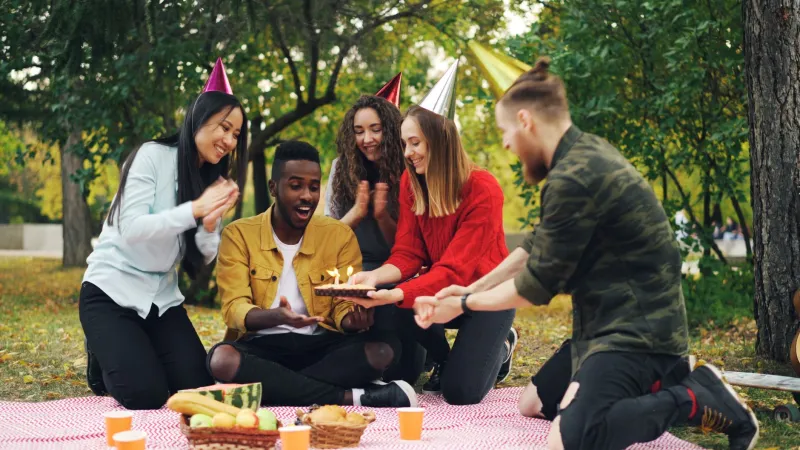
There's a particular kind of friendship that sneaks up on you. One week you're just the person who always sits two seats down at the book club, and then somehow — without any formal announcement — you're the one getting a 2 a.m. text when things go sideways. Nobody planned it. Nobody scheduled it. It just happened.
But here's the thing: it doesn't just happen. Not really.
After talking to dozens of long-term club members and a handful of people who've built communities from scratch, a clearer picture emerges. The friendships that outlast the room — the ones that travel with you through job losses, cross-country moves, and all the messy in-between — aren't random. They're the product of very specific conditions. And the good news? Most of those conditions are ones you can actually help create.
Why Clubs Are Uniquely Wired for Deep Connection
Social psychologists have been studying friendship formation for decades, and one finding keeps showing up: proximity plus repeated exposure plus a sense of shared identity is basically a recipe for bonding. Clubs, almost by design, hit all three.
You show up to the same place, with the same people, around the same shared interest, on a regular schedule. That's not nothing. That's actually the structural backbone of most meaningful friendships in adult life — which, let's be honest, are notoriously hard to form once you're past your mid-twenties.
"The club gave us a reason to keep showing up," says Marcus, a 38-year-old who joined a hiking club in Denver five years ago and now counts three of those members among his closest friends. "Without that, I don't think any of us would've made the effort. Life gets in the way. The club was the reason we kept seeing each other until we actually knew each other."
That scaffolding matters more than people realize. Friendship doesn't usually arrive fully formed — it accumulates. And clubs provide the schedule that makes accumulation possible.
The Vulnerability Window: When Things Get Real
Repeated exposure gets you in the door, but it doesn't guarantee depth. Plenty of club members see each other every single week for years and still feel like strangers. So what's the difference?
Almost universally, the people we spoke with pointed to a single turning point: a moment of genuine vulnerability.
It doesn't have to be dramatic. Sometimes it's as small as admitting you've been struggling at work, or laughing too hard at something embarrassing, or showing up to a meeting clearly having a rough day and letting people see that. But something has to crack the surface.
Joanna, who co-founded a women's entrepreneurship club in Austin three years ago, has watched this play out over and over. "There's always a moment," she says. "Someone shares something real — not the polished version of themselves — and the whole dynamic shifts. The friendships that become lasting ones almost always trace back to one of those moments."
Club founders who are intentional about this build it into their programming. Icebreakers that go deeper than "what do you do for work." Structured sharing rounds. Traditions that invite honesty. These aren't just feel-good exercises — they're the conditions that make real connection more likely.
Shared Experience vs. Shared Interest: A Crucial Distinction
Here's something that surprised us: it's not necessarily the topic of the club that creates lasting bonds. It's the experiences you go through together while you're in it.
Two book clubs can cover the same reading list and produce completely different outcomes. One becomes a group of people who know each other's families, show up to help each other move apartments, and text constantly between meetings. The other stays pleasant but surface-level. The books were the same. The difference was everything else.
Clubs that create shared experiences — not just shared content — tend to produce stronger friendships. That means events that get a little chaotic, projects that require actual collaboration, moments where things don't go according to plan and everyone has to figure it out together. Adversity, even mild adversity, is a bonding agent.
"We did this terrible escape room together once," laughs Derek, a member of a film club in Chicago. "It was a disaster. We were awful at it. But I think that two-hour experience did more for our friendships than six months of watching movies together. We still talk about it."
The Deliberate Choice Nobody Talks About
Here's the part that gets glossed over: at some point, the friendship has to leave the room.
Every single lasting club friendship we heard about involved a moment where someone made a deliberate choice to extend the relationship beyond the scheduled meeting. A text sent. An invitation extended. A coffee suggested. It sounds obvious, but it's the step most people skip — either because they assume the other person isn't interested, or because adult life makes initiating feel awkward in a way it didn't when you were younger.
"I almost didn't reach out," admits Priya, who met her closest friend through a wellness club in Atlanta four years ago. "We'd been in the same group for months. I kept thinking she probably had enough friends. Then I just sent a message asking if she wanted to grab lunch. That was it. That was the whole thing."
Club founders can help here too — by normalizing the ask, creating low-stakes opportunities for members to connect outside of meetings, and building a culture where reaching out is encouraged rather than awkward.
What the Lasting Ones Have in Common
After all the conversations, a few themes emerged consistently among friendships that started in a club and genuinely endured:
- They survived a transition. A move, a life change, a club that ended. The friendship had to prove it could exist without the original container.
- Both people invested outside the room. It was never one-sided. Both people made the effort.
- There was a real moment of knowing. Not just liking each other — actually knowing something true about the other person.
- The club gave them a shared language. Inside jokes, shared references, a history that only they have. That stuff compounds over time.
You're Closer Than You Think
If you're in a club right now and wondering whether any of those connections could become something more lasting — the answer is probably yes. But it won't happen on its own.
Show up honestly. Let something real slip through. Suggest the coffee. Send the text. Be the person who extends the invitation.
The structure is already there. Checha Club exists precisely because we believe the right room, with the right people, at the right moment, can change the shape of your whole life. But the friendship itself? That part is on you.
And honestly, that's the best part.