Big Crowds, No Thanks: Why Younger Americans Are Choosing Clubs Over Clubs
Picture the classic Friday night out: a packed bar, music loud enough to make conversation impossible, $16 cocktails, and the vague sense that you're surrounded by hundreds of people yet somehow completely alone. For a lot of younger Americans, that experience has started to feel less like fun and more like a chore.
Something is quietly changing in how Gen Z and Millennials socialize — and it goes deeper than pandemic-era habits or a preference for staying in. Across major U.S. cities and smaller metros alike, a distinct movement is taking shape: the rise of the intimate, membership-based, experience-first social space. Call it the anti-bar. Call it the return of the club — just not the kind with a velvet rope and a DJ.
The Noise Problem (And It's Not Just Decibels)
Let's start with the obvious: bars are loud. But the noise younger generations are pushing back against isn't only acoustic. It's the noise of performative socializing — the pressure to look like you're having fun, to network without purpose, to meet people you'll never actually talk to again.
Research consistently shows that Millennials and Gen Z report higher rates of loneliness than older generations, despite — or maybe because of — being the most digitally connected cohorts in history. The irony isn't lost on them. And it's pushing a real appetite for something different: social spaces that feel intentional.
"I can go to a bar any night of the week," says one 28-year-old in Austin who recently joined a themed supper club. "But I can't always find people I actually want to talk to. That's what I'm paying for now — the curation."
Enter the New Club Experience
What does "curated" look like in practice? It takes a lot of different forms, and that variety is part of what makes this trend interesting.
Speakeasy-style social clubs have been popping up in cities like New York, Los Angeles, Nashville, and Chicago — intimate venues that require a membership, a referral, or at least an RSVP. The appeal isn't exclusivity for its own sake; it's the sense that everyone in the room chose to be there, which shifts the social dynamic entirely.
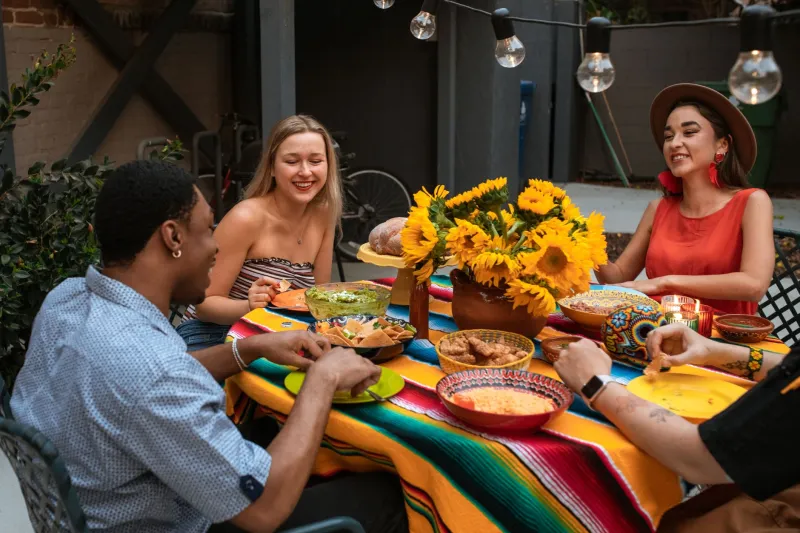
Themed dining clubs are another fast-growing format. These are ticketed, recurring dinner events organized around a specific concept — a cuisine, a cultural tradition, a literary theme, a decade. Guests are often seated with strangers by design, which sounds awkward until you realize that a shared table and a shared topic of conversation eliminate most of the social friction that makes bar introductions feel so stilted.
Professional networking lounges — not your parents' Chamber of Commerce mixer — are also gaining traction. Think less "collect business cards" and more "have a genuine conversation with someone in your field over good coffee." These spaces tend to be smaller, quieter, and built around a specific industry or interest rather than a general professional demographic.
And then there are hobby-forward membership clubs: film societies, book clubs with cocktail hours, cooking collectives, record listening rooms. These aren't new concepts, but they're experiencing a real renaissance among younger adults who are actively seeking structure for their social lives.
What This Reveals About How We Want to Connect
There's a sociological thread running through all of this, and it's worth naming: younger Americans aren't becoming antisocial. They're becoming selective.
This generation grew up watching social media turn socialization into content. Every party was a photo opportunity. Every outing was a potential post. That kind of visibility — and the performance it demands — is exhausting. Smaller, more private spaces offer something increasingly rare: the freedom to just be somewhere without broadcasting it.
There's also a values alignment piece. Gen Z in particular gravitates toward spaces that reflect something about who they are or what they care about. A climate-focused hiking club. A queer-friendly book group. A South Asian cultural dining collective. These aren't just social events — they're expressions of identity, and they attract people who share it.
Social anxiety is another factor that rarely gets discussed openly but shapes a lot of behavior. For people who find large, unstructured social environments overwhelming, a smaller gathering with a built-in activity or conversation topic is genuinely more accessible. The format does some of the social heavy lifting.
The Economics of Belonging
Here's where it gets nuanced: a lot of these curated experiences cost money. Membership fees, ticketed dinners, dues-based clubs — they're not free. And that raises a real question about who gets access to this kind of intentional community.
The honest answer is that the trend currently skews toward urban, college-educated, middle-income young adults. That's a limitation worth acknowledging. But it's also prompting a counter-movement of community-led, low-cost alternatives — grassroots micro-clubs, free neighborhood gatherings, skill-share collectives — that try to replicate the intentionality without the price tag. (Sound familiar? It's basically what we talk about here at Checha Club all the time.)
The underlying desire — to find your people, to belong somewhere specific, to socialize with purpose — isn't exclusive to any income bracket. The formats are just different.
What Bars Can Learn (And What They're Already Doing)
Traditional bars and venues aren't oblivious to this shift. Many are adapting. Trivia nights, board game bars, ax-throwing venues, paint-and-sip studios — these hybrid experience-entertainment spaces have exploded over the past decade precisely because they give people a reason to be somewhere together beyond just drinking.
The smartest venues are leaning further into community programming: hosting recurring themed events, building loyalty through membership perks, partnering with local clubs to bring their gatherings in-house. It's a smart pivot. The demand for shared experience isn't going away — the demand for anonymous, high-volume nightlife is what's softening.
The Takeaway
The shift toward intimate, curated social experiences isn't a rejection of going out. It's a redefinition of what going out is for. Younger Americans are increasingly clear that they want more than a venue — they want a context, a community, a reason to come back.
That's exactly the kind of thing Checha Club is built around. Whether you're looking for your next favorite gathering spot or thinking about creating one yourself, the message from this generation is pretty clear: make it smaller, make it intentional, and make it matter.
The era of showing up just to show up might finally be over. And honestly? That sounds like progress.