Circles Inside Circles: How Mini-Tribes Are Changing What Club Loyalty Even Means
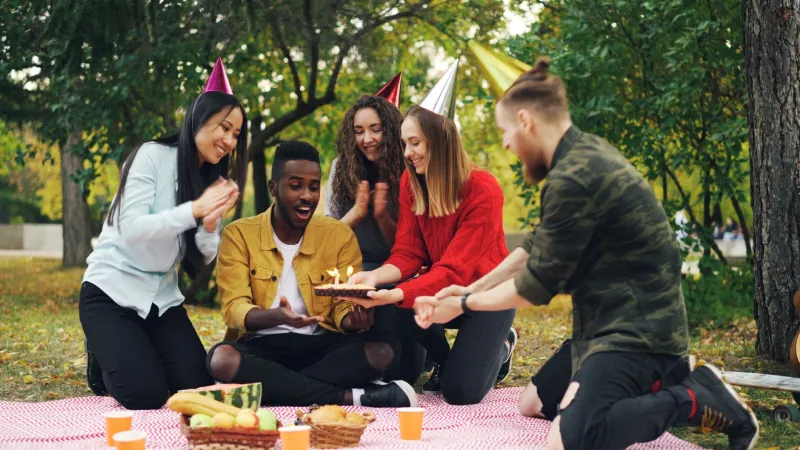
Something interesting happens after a club hits a certain size. The group chat gets unwieldy. The monthly meetup starts feeling less like a gathering of friends and more like a work happy hour you didn't totally plan for. And quietly, almost organically, people start finding their people within their people.
Call them sub-communities, inner circles, or just "the crew I actually text" — these smaller clusters are forming inside clubs everywhere, and they're fundamentally shifting what it means to belong to something bigger.
When the Big Tent Gets Too Big
Take Dominique Reyes, a member of a Chicago-based hiking and outdoor adventure club with nearly 400 active members. She joined two years ago hoping to meet people who'd actually show up for a 6 a.m. trail run. What she found instead was a sprawling community that ranged from hardcore ultramarathoners to people who considered a walk around the park a full outdoor experience.
"It's a great club, don't get me wrong," she says. "But I found my real people at a smaller level. There's about twelve of us who do the harder trails, and we have our own group chat, our own pre-hike coffee spot. That's where I actually feel known."
Her experience isn't unusual. Across the country, as clubs grow and diversify, members are naturally gravitating toward subgroups built around shared pace, shared humor, or shared obsession with a specific niche within the niche. The book club within the book club that only reads translated fiction. The runners' club splinter group that meets an hour earlier for people who hate small talk before mile three.
What Organizers Are Actually Seeing
For club leaders, this trend is a double-edged thing to manage.
Marco Tillman has been running a Philadelphia-based creative professionals' club for five years. When his membership crossed 200, he started noticing something: attendance at large events stayed flat, but smaller, self-organized spinoffs were exploding with energy. Illustrators were meeting separately from copywriters. A group of members who'd connected over a love of vintage design started their own monthly show-and-tell.
"At first I was a little threatened by it, honestly," Marco admits. "Like, are these people checking out of the main thing? But then I realized — no. They're more invested than ever. They just needed a smaller room to feel like themselves."
He eventually leaned into it, building official infrastructure around what was already happening informally. Subgroups got their own channels, their own event slots on the club calendar, their own mini-budgets. Engagement across the whole club went up.
Not every organizer has had the same smooth experience, though.
Jessica Hartman, who runs a wellness and mindfulness community in Austin, watched a subgroup slowly develop its own identity to the point where it started competing with the main club's events. "They'd schedule things on the same nights, and people had to choose. It created this weird tension that nobody wanted to name out loud." She eventually had to have some honest conversations about coordination — and about what the subgroup actually needed that the larger club wasn't providing.
The Belonging Paradox
Here's the thing that makes subgroups so psychologically powerful: humans aren't actually wired to feel deeply close to 400 people. Anthropologist Robin Dunbar famously suggested our brains can comfortably maintain about 150 stable social relationships — and our truly intimate circle tends to hover around five to fifteen people.
Clubs, at their best, are a gateway. They create enough critical mass that you're likely to find your people. But the actual belonging? That tends to crystallize at a much smaller scale.
"The big club gives me legitimacy and access," says Trevor Walsh, a member of a Denver board gaming community. "But my core group of six — those are the people I'd actually call if something went wrong. The club introduced us. The subgroup is where we actually live."
This nested structure — big umbrella, small inner circle — seems to be the sweet spot for a lot of members. The larger community provides events, visibility, and the comforting sense that your interests are shared by a whole crowd of humans. The subgroup provides the intimacy, the vulnerability, the stuff that actually sticks.
Fracture Lines and How to Spot Them
Of course, not all subgroups are healthy. Sometimes a splinter group forms not out of shared passion but out of shared grievance — and that's when things get messy.
Organizers interviewed for this piece consistently flagged the same warning signs: a subgroup that mostly communicates through complaints about the main club, that recruits new members by positioning itself as the "real" or "cooler" version of the community, or that starts operating with a level of secrecy that makes the broader membership feel excluded.
"There's a difference between a subgroup that enriches the club and one that slowly hollows it out," Marco says. "The healthy ones are additive. They bring their energy back to the main group. The unhealthy ones are extractive — they take the best people and disappear."
The fix, most organizers agree, isn't to suppress subgroups but to create enough permeability between them and the larger community. Cross-pollination events. Subgroup leaders who are also invested in the main club's health. Regular check-ins that make smaller circles feel seen and valued rather than tolerated.
Both, Not Either
What's emerging from all of this is a more nuanced picture of how modern community actually works. People don't want to choose between the big, buzzy energy of a full club gathering and the quiet comfort of a tight inner circle. They want both — and they're building both, whether organizers plan for it or not.
The clubs that are thriving seem to be the ones that figured out how to hold space for both scales of belonging simultaneously. The ones that treat subgroups not as a threat to club identity but as proof that the community is alive enough to keep growing inward.
Dominique puts it simply: "My hiking club is where I found my people. My trail crew is my people. I need both sentences to be true."
At Checha Club, we talk a lot about finding your people — but maybe the real story is finding them at multiple levels at once. The big room gets you in the door. The small circle is where you actually take your coat off.