Why the Best Clubs Feel Like a Different Country (And That's the Whole Point)
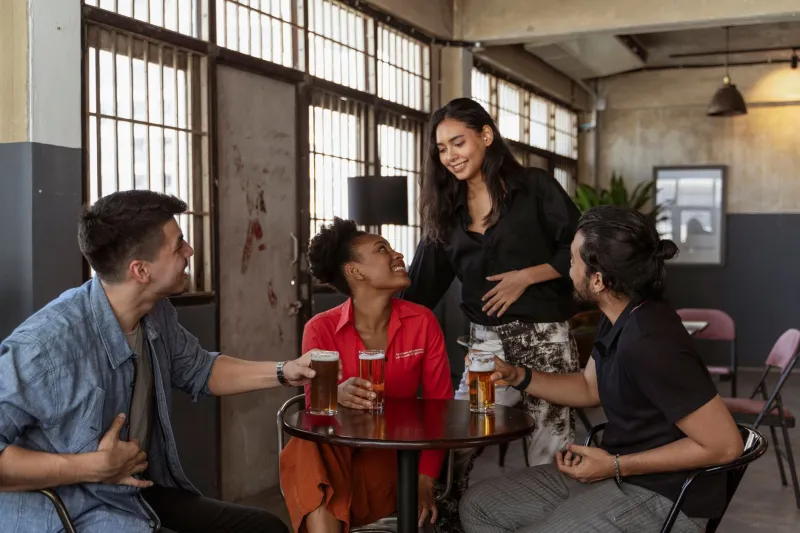
Walk into the wrong book club meeting without knowing what "the Donna moment" means, and you'll spend the next two hours nodding along like you're in a foreign film without subtitles. Ask someone in a long-running investment group why everyone groans when someone mentions "the copper trade," and you'll get a ten-minute story delivered with the reverence of scripture.
Every thriving club eventually develops its own culture. Not on purpose, exactly — it just happens. And once you understand why it happens, you start to realize that this insider language isn't a bug. It's the whole feature.
The Anthropology of a Great Group
Humans are wired to form tribes. Before we had Discord servers or neighborhood Facebook groups, we had campfires, guilds, and secret societies. The need to belong to something with its own identity is as old as the species.
What modern clubs do — sometimes accidentally, sometimes with real intention — is tap into that same instinct. When a group of people shares enough time and experience together, they start building a kind of shorthand. A reference to a disastrous camping trip becomes a punchline that lands in two words. A founding member's catchphrase gets adopted ironically, then sincerely, then permanently.
Researchers who study group cohesion call these elements "symbolic boundaries" — the markers that distinguish members from non-members. But here at Checha Club, we just call it the vibe. And the vibe is everything.
Rituals: The Weirder, the Better
Rituals don't have to be elaborate to be powerful. Some of the stickiest ones are almost embarrassingly simple.
Take a hiking club in Colorado that ends every trail with a group toast using whatever snacks people brought — granola bars, orange slices, gas station jerky, it doesn't matter. The ritual takes thirty seconds. But members who've been doing it for four years will tell you it's the part of the hike they look forward to most.
Or consider the fantasy football leagues that have been running in the same friend group for fifteen-plus years, complete with a trophy that gets uglier every time someone "improves" it with a new piece of hardware from the dollar store. The trophy is objectively terrible. It is also irreplaceable.
The common thread? These rituals create a before and after. They mark transitions — the start of a meeting, the end of an event, the induction of a new member. And every time they're repeated, they deposit another layer of meaning into the group's shared history.
If your club doesn't have a ritual yet, don't overthink it. Pick something small and do it consistently. The meaning will grow on its own.
Inside Jokes as Social Infrastructure
Here's something counterintuitive: inside jokes aren't actually about being funny. They're about memory.
When a group shares a joke that only they understand, what they're really doing is referencing a shared experience. They're saying, we were all there, we all remember, we're still us. The laughter is almost secondary.
This is why inside jokes are such powerful retention tools for clubs and communities. Every time one lands, it reinforces the invisible thread connecting everyone in the room. New members who don't get it yet feel the pull to stick around long enough to earn the context. Veteran members feel the warmth of continuity.
The trick is making sure your club's jokes and references don't calcify into a wall that keeps newcomers permanently outside. The best communities find ways to induct new members into the lore — telling the origin stories, explaining the references, making people feel like the history is something they're joining, not something they're excluded from.
Unwritten Rules: The Real Membership Manual
Every club has a set of official rules. Meeting times, membership dues, event schedules. But the real manual — the one that actually tells you how to belong — is never written down anywhere.
In some book clubs, you're expected to finish the book before you have opinions. In others, not finishing is completely fine and the point is just to show up. In some running groups, you never drop below a certain pace. In others, no one gets left behind, full stop.
These unwritten rules carry enormous weight because they encode the group's actual values. They're the difference between what a club says it's about and what it's actually about. And they're usually only learned through experience — through the slightly awkward moment when you realize you've done something that doesn't quite fit, and someone gently (or not so gently) fills you in.
Healthy clubs find ways to surface these norms early for new members. Not by posting a list of "real rules" on the wall, but by having longer-tenured members share stories, by creating low-stakes situations where norms can be observed organically, by building in the kind of casual hang time where culture gets transmitted naturally.
Building Culture on Purpose
Some of the most successful communities in the US don't leave culture to chance. They actively cultivate it.
This doesn't mean manufacturing fake traditions or forcing inside jokes into existence. It means creating the conditions for culture to grow — regular gatherings, shared challenges, a mix of structured and unstructured time, and enough psychological safety that people feel comfortable being weird together.
It also means protecting the culture once it exists. That means onboarding new members thoughtfully, telling origin stories often, and honoring the people and moments that shaped who the group became.
The clubs that last — the ones people are still showing up for ten, twenty years in — aren't the ones with the best snacks or the most organized events (though both help). They're the ones where members feel like they're part of something that couldn't exist without them specifically.
That feeling doesn't come from a membership card. It comes from knowing all the words to the song that nobody else knows.
And honestly? That's the whole point of finding your people.