Did Your Club Change Your Mind? The Quiet Way Communities Are Rewiring What Americans Stand For
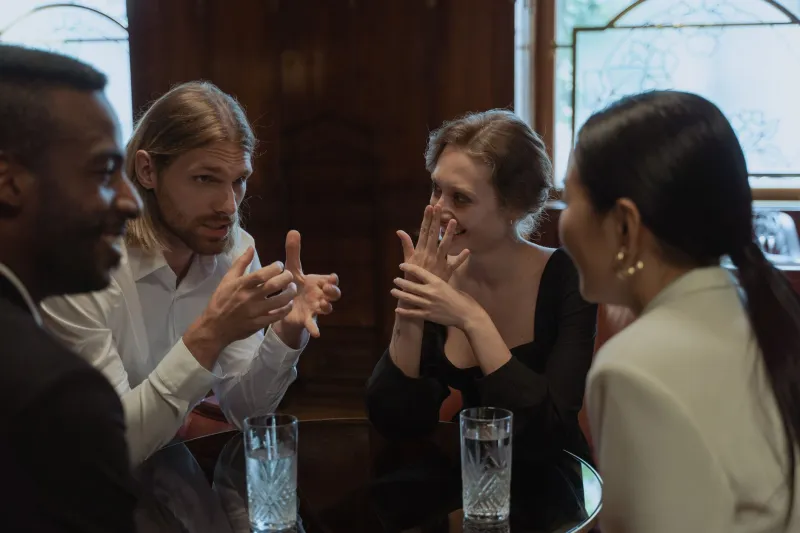
Nobody joins a birding club expecting to rethink their stance on land conservation policy. Nobody signs up for a tabletop gaming night figuring they'll walk away with a new perspective on economic inequality. And yet, that's exactly the kind of thing that keeps happening — quietly, without fanfare, in church basements and rented community halls and Discord servers all across the United States.
The idea that your social environment shapes your beliefs isn't new. But what is new is the specific texture of how it's playing out right now, in an era where Americans are increasingly sorting themselves into hyper-specific interest communities rather than broad ideological tribes. When your group is built around something as granular as fermentation hobbyists or competitive jump rope or 1970s soul vinyl, the people you end up sitting next to don't always look like you, vote like you, or come from where you came from. And that friction — the gentle, sustained kind — turns out to be surprisingly powerful.
The Slow Drip of Perspective
Ask anyone who's had a major belief shift and they'll rarely point to a single conversation or a viral video. It's almost always a slow accumulation of small moments. A comment that sticks with you. A story someone shares over snacks after the meeting wraps up. A moment when you realize the person who knows more about this thing you love than almost anyone — the person whose judgment you deeply respect — sees the world in a way you hadn't seriously considered before.
That's the mechanism. Shared passion creates trust, and trust creates openness. It's a lot harder to dismiss a perspective when it's coming from someone you genuinely like and admire, someone who's earned credibility with you in a completely separate domain.
Marcos, a 38-year-old electrician from outside Columbus, Ohio, joined a community garden collective mostly because he wanted fresh tomatoes and something to do on weekends. He grew up in a pretty politically conservative household, voted accordingly, and hadn't given a lot of thought to things like food sovereignty or urban planning. Three years into the club, he describes his thinking as "a lot more complicated" than it used to be. "I didn't change parties or anything like that," he says. "But I started asking different questions. About who owns what. About why some neighborhoods have three grocery stores and some have zero. I don't think I would've gone looking for those questions on my own."
It's Not Indoctrination — It's Exposure
It's worth being clear about what this isn't. This isn't about clubs recruiting members into ideological frameworks or pushing political agendas. The communities where this kind of organic belief evolution tends to happen are usually the ones that aren't trying to do it at all. Nobody at Marcos's garden collective was handing out pamphlets. The shift happened because he was spending real, unstructured time with people whose life experiences were genuinely different from his own — and they all happened to care about the same patch of dirt.
That's a meaningful distinction. There's a big difference between being told what to think and simply being around people who think differently, over and over again, until some of what they see starts to make sense to you.
Jasmine, a 29-year-old marketing coordinator from Atlanta who joined a local hiking and trail maintenance club, puts it this way: "I came in with certain assumptions about environmentalism — that it was kind of a white, wealthy thing, honestly. And then I met people from all these different backgrounds who cared deeply about the same trails I did, for totally different reasons. That messed with my assumptions in a good way. I had to rethink some stuff."
The Question Worth Sitting With
Here's where it gets philosophically interesting: did the club actually change these people, or did it just accelerate something that was already in motion?
There's a reasonable argument that most significant belief shifts aren't really reversals — they're completions. You were already moving in a direction, already accumulating small doubts or curiosities, already sensing that your inherited worldview had some gaps. The club didn't install new software. It just gave the existing process a place to run.
That framing is a little more comfortable, maybe. It preserves a sense of authorship over your own evolution. But it also raises a follow-up question: if you'd never found that community, would the shift have happened anyway? Or would those half-formed doubts have just... stayed half-formed?
For a lot of people, the honest answer seems to be that the club was the catalyst. Without the relationships, without the specific texture of that shared experience, the evolution might've stalled out or never started at all.
What This Means for How We Think About Community
There's a tendency in American culture to treat politics and social life as separate spheres — your beliefs are yours, your hobbies are yours, and the two don't really mix. But that separation has always been a little fictional. The communities we embed ourselves in have always shaped what we think is normal, what we think is possible, what we think is worth caring about.
What's different now is that people are joining communities that cut across traditional demographic and political lines in ways that older institutions — churches, unions, neighborhood associations — often didn't. A hyper-niche club can pull together a retired schoolteacher from rural Minnesota, a twentysomething software engineer from Austin, and a middle-aged small business owner from suburban New Jersey, all because they share one very specific obsession. That mix doesn't happen by accident in most other social contexts.
And when those people spend enough time together — when they argue about club logistics and celebrate each other's wins and sit through the boring parts of the meeting and grab a drink after — something permeable happens. Ideas move. Priorities shift. The world gets a little more complicated, in the best possible way.
You Don't Have to Have It All Figured Out
If you're sitting with a belief or a value that feels like it's starting to loosen at the edges, that's not a crisis. It might just mean you've found a community that's actually doing its job. The best clubs don't just give you somewhere to go on a Tuesday night — they give you people who expand what you think is worth considering.
That's not a political statement. It's just what happens when you let real relationships form between people who actually show up for each other. The views you walk in with might not be exactly the views you walk out with, and that's okay. In fact, it might be the whole point.
Your people are out there. And they might just change your mind.