The Moment a Club Stops Being an Obligation and Starts Feeling Like Home
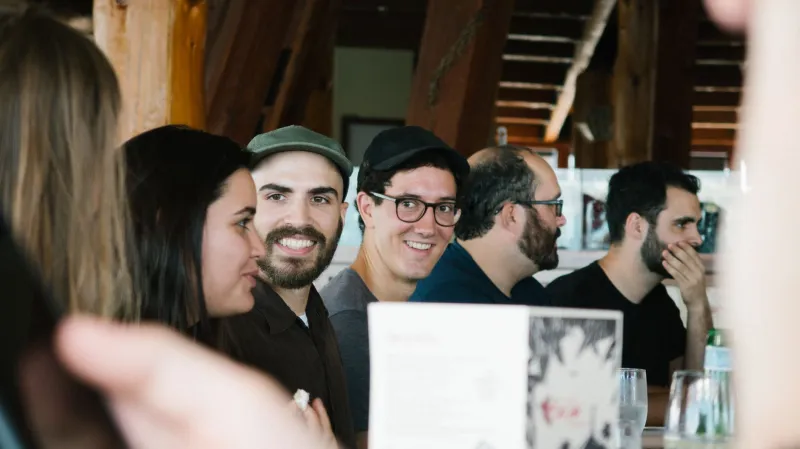
Ask anyone who's been part of a club for more than a year — a real club, one they actually show up to — and they can usually tell you the exact moment things clicked.
For Maria, a 34-year-old teacher in Austin, it was when her book club's group chat blew up at midnight over a plot twist, and she realized she'd been laughing at her phone for twenty minutes. For Derek, a software engineer in Chicago, it was when the guys from his weekend cycling group showed up unannounced with food after he mentioned, offhand, that he'd had a rough week. For Priya, it was simpler: someone remembered her coffee order.
These aren't dramatic moments. They're tiny. But they're the moments that separate a club someone attends from a community someone belongs to — and the psychology behind that distinction is more fascinating than most people realize.
Starting From Lonely: Why People Join in the First Place
Let's be honest about something: a lot of people find their way to clubs because something feels missing. That's not a criticism — it's just true, and it's worth saying plainly.
According to data from the Surgeon General's 2023 advisory on loneliness, more than half of American adults report measurable feelings of isolation. And while the causes are complicated — longer commutes, later marriages, more remote work, social media that connects and alienates simultaneously — the result is a population quietly hungry for belonging.
Clubs, in their many forms, are one of the oldest answers to that hunger. Book clubs, running groups, hobby collectives, professional networks, neighborhood associations — they all promise the same basic thing: a recurring reason to be around people who share something with you.
But showing up once, or even a few times, doesn't create belonging. So what does?
The Trust Ladder: How Loyalty Actually Gets Built
Psychologists who study group dynamics often talk about something called "gradual disclosure" — the slow, incremental process through which people reveal more of themselves as trust develops. It's the same mechanism that turns a stranger on a plane into someone you've told your whole life story to by landing.
In club settings, this process plays out over months, sometimes longer. It starts with surface-level interactions — shared opinions on the book, friendly small talk before a run, professional advice exchanged over coffee. Over time, if the environment feels safe, people go a little deeper. They mention the divorce, the job stress, the health scare. And when those revelations are received without judgment, something shifts.
"The clubs that retain members longest are almost never the ones with the best programming," says one community organizer who runs multiple interest groups across the Pacific Northwest. "They're the ones where people feel like they can actually be themselves. That takes time to build, but once it's there, people don't want to lose it."
This is why the first few months of club membership are statistically the most precarious. New members haven't yet climbed enough rungs on the trust ladder to feel genuinely invested. One awkward meeting, one scheduling conflict, one moment of feeling like an outsider — and they're gone.
Accountability as a Form of Care
Here's something counterintuitive: one of the strongest predictors of long-term club loyalty is being held accountable.
Not in a punitive way. But when someone in your running group texts to ask why you weren't at Saturday's meetup — not to shame you, just because they noticed — that lands differently than you might expect. It says: you are seen. You were expected. You were missed.
For a lot of Americans who live relatively atomized lives — especially those who moved cities for work, or whose social circles thinned out after college — that kind of low-stakes accountability can feel almost startling. We're not used to being tracked in warm ways.
Club organizers who understand this build check-in culture deliberately. They follow up when someone goes quiet. They celebrate streaks — not to create pressure, but to acknowledge consistency. They make attendance feel like it matters, because in a functioning community, it does.
The Specific Moments That Make or Break Membership
Through conversations with club members across the country — from a quilting circle in rural Tennessee to a professional women's network in New York City to a tabletop gaming group in Phoenix — a few recurring "tipping point" moments emerged.
The first time someone remembers something personal. Not your name — something you mentioned in passing three weeks ago. It signals that people are actually paying attention to you, not just filling a seat.
The first time you're included in something outside the official club context. Someone texts you about a movie they thought you'd like. You get invited to a post-meeting dinner. The group's social fabric extends beyond its formal structure, and suddenly you're part of it.
The first time you help someone. Belonging isn't just about receiving — it's about contributing. The moment you realize you have something to offer this group, something changes. You're no longer a newcomer being welcomed in. You're a member.
The first time you stay when it would have been easy to leave. A bad meeting, a scheduling crunch, a stretch where you're just not feeling it — and you show up anyway. That choice, made privately, is often when people commit to a club in a way they hadn't before.
Why People Leave — And What It Actually Signals
Not every departure is a failure. Life changes, interests shift, schedules implode. But there's a difference between someone who leaves a club because their circumstances changed and someone who drifts away because the group never quite delivered on its implicit promise of belonging.
The second kind of exit — the slow fade — is almost always preceded by a specific feeling: invisibility. The sense that you could stop coming and it would take a while for anyone to notice. That's not a character flaw in the leaver. It's a gap in the community's infrastructure.
Groups that pay attention to this — that actively work to make sure no member feels interchangeable — retain people at dramatically higher rates. It's not complicated. It's just intentional.
What This Means for Anyone Looking for Their People
If you're somewhere in that early, uncertain phase of club membership — going, but not yet sure it's worth it — here's what the psychology actually says: give it longer than feels comfortable.
Belonging is not a feeling that arrives on schedule. It accumulates. It's built from small moments that don't seem significant until you look back and realize that, somewhere along the way, these became your people.
And when that happens — when the group chat makes you laugh at midnight, or someone shows up with food, or a stranger remembers how you take your coffee — you'll know you're exactly where you're supposed to be.